


Como cliente Amazon Prime obtén 3 meses de Audible gratis
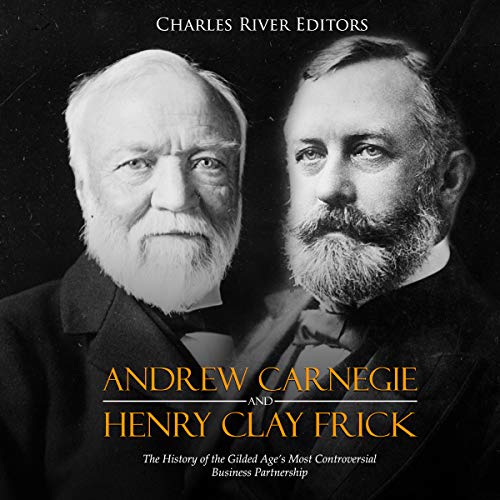
Andrew Carnegie and Henry Clay Frick: The History of the Gilded Age’s Most Controversial Business Partnership
No se ha podido añadir a la cesta
Error al eliminar la lista de deseos.
Se ha producido un error al añadirlo a la biblioteca
Se ha producido un error al seguir el podcast
Error al dejar de seguir el podcast
Escúchalo ahora gratis con tu suscripción a Audible

Andrew Carnegie and Henry Clay Frick: The History of the Gilded Age’s Most Controversial Business Partnership
Compra ahora por 7,23 €
-
Narrado por:
-
Ken Teutsch
The term robber baron has largely fallen into disuse in the 21st century but there was a time when it was a popular epithet that described the kind of man who, it was believed, built his fortune by taking things belonging to others. The Gilded Age and the dawn of the 20th century are often remembered as an era full of monopolies, trusts, and economic giants in heavy industries like oil and steel. Men like Andrew Carnegie built empires like Carnegie Steel, and financiers like J.P. Morgan merged and consolidated them. The era also made names like Astor, Cooke, and Vanderbilt instantly recognizable across the globe. Over time, the unfathomable wealth generated by the businesses made the individuals on top incredibly rich, and that in turn led to immense criticism and an infamous epithet used to rail against them: robber barons.
The industrial might wielded by men like Gould in the late-19th century directly led to a public backlash and made President Teddy Roosevelt the “trust buster”, and there have since been countless regulations to attempt to avoid the types of monopolies found over 100 years ago. However, many 20th century historians and writers pushed back against the allegations hurled at the “robber barons” and even took issue with the name. For example, Libertarian writer John Stossel argued, “They weren't robbers, because they didn't steal from anyone, and they weren't barons - they were born poor...”
Dozens of these men would be pilloried as “robber barons,” but few of them were as wealthy or influential as Andrew Carnegie, who built America’s foremost steel empire. Ironically, Carnegie epitomized the American Dream, migrating with his poor family to America in the mid-19th century and rising to the top of the business world in his adopted country. A prodigious writer in addition to his keen sense of business, Carnegie was one of the most outspoken champions of capitalism at a time when there was pushback among lower social classes who witnessed the great disparities in wealth; as he once put it, “Upon the sacredness of property civilization itself depends - the right of the laborer to his hundred dollars in the savings bank, and equally the legal right of the millionaire to his millions.”
©2018 Charles River Editors (P)2018 Charles River Editors


