


Como cliente Amazon Prime obtén 3 meses de Audible gratis
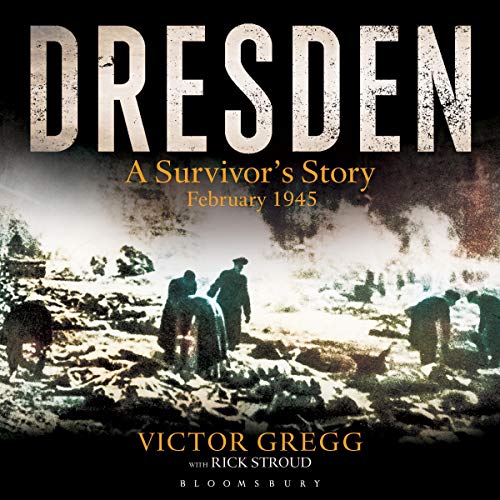
Dresden
A Survivor's Story, February 1945
No se ha podido añadir a la cesta
Solo puedes tener 50 títulos en tu cesta para poder pagar.
Vuelve a intentarlo más tarde
Vuelve a intentarlo más tarde
Error al eliminar la lista de deseos.
Vuelve a intentarlo más tarde
Se ha producido un error al añadirlo a la biblioteca
Inténtalo de nuevo
Se ha producido un error al seguir el podcast
Inténtalo de nuevo
Error al dejar de seguir el podcast
4,09 € los primeros 30 días
Después de los 30 días, 9,99 €/mes. Cancela tu siguiente plan mensual cuando quieras.
Disfruta de más de 90.000 títulos de forma ilimitada.
Escucha cuando y donde quieras, incluso sin conexión
Sin compromiso. Cancela tu siguiente plan mensual cuando quieras.

Dresden
Narrado por:
David John, Victor Gregg
Compra ahora por 5,96 €
-
Narrado por:
-
David John
-
Victor Gregg
'Victor Gregg is the most remarkable spokesman for the war generation' Dan Snow
In Slaughterhouse-Five, Kurt Vonnegut fictionalised his time as a prisoner of war in Dresden in 1945. Vonnegut was imprisoned in a cellar while the firestorm raged through the city, wiping out generations of innocent lives. Victor Gregg remained above ground throughout the firebombing. This is his true eyewitness account of that week in February 1945.
Already a seasoned soldier with the Rifle Brigade, Gregg joined the 10th Parachute Regiment in 1944. He was captured at Arnhem where he volunteered to be sent to a work camp rather than become another faceless number in the huge POW camps. With two failed escape attempts under his belt, Gregg was eventually caught sabotaging a factory and sent to Dresden for execution.
Before Gregg could be executed, the British Royal Air Force and the United States Army Air Forces dropped more than 3,900 tons of high-explosive bombs and incendiary devices on Dresden in four air raids over two days in February 1945. The resulting firestorm destroyed six square miles of the city centre. 25,000 people, mostly civilians, were estimated to have been killed. Post-war discussion of whether or not the attacks were justified has led to the bombing becoming one of the moral questions of the Second World War.
In Gregg's first-hand narrative, personal and punchy, he describes the trauma and carnage of the Dresden bombing. After the raid, he spent five days helping to recover a city of innocent civilians, thousands of whom had died in the fire storm, trapped underground in human ovens. As order was restored, his life was once more in danger and he escaped to the east, spending the last weeks of the war with the Russians.©2013 Victor Gregg (P)2019 Bloomsbury Publishing PLC
adbl_web_anon_alc_button_suppression_t1
Reseñas de la crítica
Victor Gregg is the most remarkable spokesman for the war generation. Searingly honest in his appraisal of what that conflict did to the world, on society and, above all, on himself. (Dan Snow)
This is a small but extremely thought-provoking book about the Allied bombing of Dresden in eastern Germany, written by a soldier who was a prisoner of war and who was there and whose life, upon witnessing such horror, was re-evaluated. Whether you think the bombing was justified (after Coventry had suffered similar) or not, this is such a moving record written from a soldier's perspective about his enemies and the suffering that such bombing created. Read, think and read again. (Bruce Kemble-Johnson)
It is an engaging tale and the author writes with a witty sarcasm that keeps the narrative flowing. (Patrick Shrier)
No hay reseñas aún


