


Como cliente Amazon Prime obtén 3 meses de Audible gratis
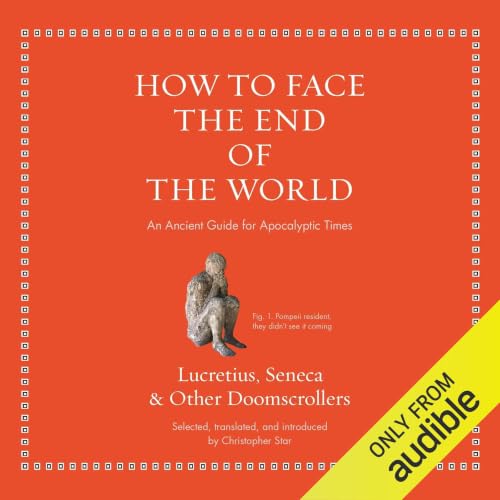
How to Face the End of the World
An Ancient Guide for Apocalyptic Times
No se ha podido añadir a la cesta
Error al eliminar la lista de deseos.
Se ha producido un error al añadirlo a la biblioteca
Se ha producido un error al seguir el podcast
Error al dejar de seguir el podcast
0,99 € al mes durante los primeros 3 meses

How to Face the End of the World
Compra ahora por 5,96 €
-
Narrado por:
-
Edoardo Ballerini
A grimly entertaining anthology of ancient Greek and Roman writings about how to fearlessly prepare for the end of the world and other disasters
A remarkable percentage of people believe we are living in the end times, according to pollsters. Between the climate crisis, nuclear weapons, AI, and other existential threats, it’s easy to see why. How should we think about the apocalypse? How can we mentally prepare for doomsday and other disasters? This anthology presents ancient Greek and Roman writings about the end of the world—from the poet Hesiod and his prediction that Zeus will destroy humanity to philosophers such as Plato, Lucretius, Seneca, and Epictetus, who viewed the end of the world as an inevitable and regular process of nature and the cosmos. These writers—the original doomscrollers—show how thinking about the annihilation of civilization or the planet can be instructive and healthy, and they seek to teach listeners how to face catastrophe without fear.
Featuring fresh new translations and an introduction, this collection presents stories and ideas that are both familiar and unfamiliar. Here, Plato invents the tale of Atlantis to illustrate the idea that civilization is periodically wiped out by natural disasters, the Epicureans envision total planetary destruction in a universe guided by natural laws, the Stoics theorize that the cosmos is repeatedly consumed by its “creative fire” and then reborn, and much more.
Along the way, we discover the ancient roots of modern doomsday prepping and postapocalyptic fiction. But most of all, we learn how thinking about the end of the world can be oddly reassuring and improve how we live today.
©2026 Princeton University Press (P)2026 Blackstone Publishing


