


Como cliente Amazon Prime obtén 3 meses de Audible gratis
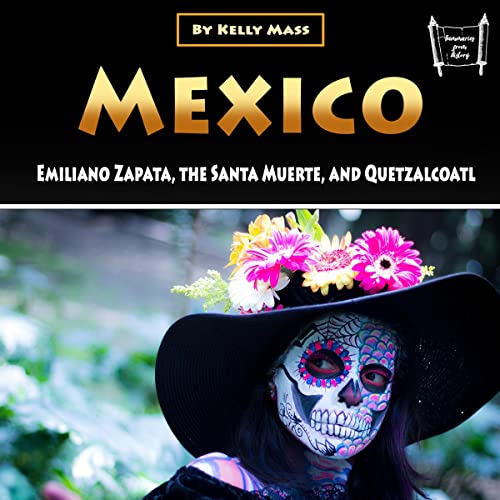
Mexico
Emiliano Zapata, the Santa Muerte, and Quetzalcoatl
No se ha podido añadir a la cesta
Solo puedes tener 50 títulos en tu cesta para poder pagar.
Vuelve a intentarlo más tarde
Vuelve a intentarlo más tarde
Error al eliminar la lista de deseos.
Vuelve a intentarlo más tarde
Se ha producido un error al añadirlo a la biblioteca
Inténtalo de nuevo
Se ha producido un error al seguir el podcast
Inténtalo de nuevo
Error al dejar de seguir el podcast
4,92 € los primeros 30 días
Después de los 30 días, 9,99 €/mes. Cancela tu siguiente plan mensual cuando quieras.
Disfruta de más de 90.000 títulos de forma ilimitada.
Escucha cuando y donde quieras, incluso sin conexión
Sin compromiso. Cancela tu siguiente plan mensual cuando quieras.

Mexico
Narrado por:
Chris Newman
Compra ahora por 7,03 €
-
Narrado por:
-
Chris Newman
-
De:
-
Kelly Mass
This is a combo audiobook with three different topics, all related to the beliefs, history, and culture of Mexico. The topics are the following:
- Emiliano Zapata Salazar was a revolutionary in Mexico. He was a key figure in the Mexican Revolt of the years 1910 until 1920, and also the primary leader of the people's revolution in the Mexican state of Morelos and the creator of the Zapatismo agrarian movement.
- Quetzalcoatl is an Aztec divine being whose name originates from the Nahuatl language and meaning "valuable snake" or "Quetzal-feathered snake". "Quetzalcoatl, in its actual sense, means 'snake of valuable plumes', but in the allegorical sense, 'best of men'," said Ixtlilxóchitl, a descendant of Aztec royalty and history expert of the Nahua people, in the 17th century.
- The cult image, female divine being, and folk saint Nuestra Seora de la Santa Muerte (Spanish meaning: Our woman of the holy death) is a cult image, female divine being, and folk saint in Mexican Neopaganism and folk Catholicism. Her worshippers relate her with healing, security, and safe delivery to the afterlife simply because she's a personification of death. In spite of condemnation from Catholic Church leaders and, more just recently, evangelical movements, her following has grown substantially since the start of the 21st century.
adbl_web_anon_alc_button_suppression_t1
No hay reseñas aún


