


Como cliente Amazon Prime obtén 3 meses de Audible gratis
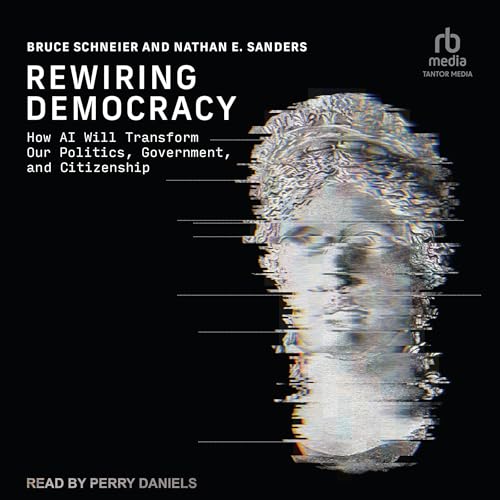
Rewiring Democracy
How AI Will Transform Our Politics, Government, and Citizenship
No se ha podido añadir a la cesta
Error al eliminar la lista de deseos.
Se ha producido un error al añadirlo a la biblioteca
Se ha producido un error al seguir el podcast
Error al dejar de seguir el podcast
Escúchalo ahora gratis con tu suscripción a Audible

Rewiring Democracy
Compra ahora por 16,99 €
-
Narrado por:
-
Perry Daniels
In this advisedly optimistic book, Rewiring Democracy, security technologist Bruce Schneier and data scientist Nathan Sanders cut through the AI hype and examine the myriad ways that AI is transforming every aspect of democracy—for both good and ill.
The authors describe how the sophistication of AI will fulfill demands from lawmakers for more complex legislation, reducing deference to the executive branch and altering the balance of power between lawmakers and administrators. They show how the scale and scope of AI is enhancing civil servants' ability to shape private-sector behavior, automating either the enforcement or neglect of industry regulations. They also explain how both lawyers and judges will leverage the speed of AI, upending how we think about law enforcement, litigation, and dispute resolution.
Whether these outcomes enhance or degrade democracy depends on how we shape the development and use of AI technologies. Powerful players in private industry and public life are already using AI to increase their influence, and AIs built by corporations don't deliver the fairness and trust required by democratic governance. But, steered in the right direction, AI's broad capabilities can augment democratic processes and help citizens build consensus, express their voice, and shake up long-standing power structures.
©2025 Massachusetts Institute of Technology (P)2025 Tantor MediaThere was little or no mention of the risks posed by AI being solely in the hands of a handful of corporations, no mention of the impact of AI on global resources consumption, no mention on the risks of recycling knowledge for lack of human generated data if AI continues to take over, no mention of what may happen if (when) the AI bubble bursts and all AI-powered systems will find themselves without data to query, very little mention of government-generated AI and its effects on national or global surveillance.
The book is heavy on generic suggestion on "using AI better" or "resisting evil AI usage" but without any practical or even realistic idea on how to start doing so. In short, a waste of time.
Moreover, the narrator, listed as a real person, has a robotic voice that gives the whole book a eerie feeling. Ironic!
Short on content and delivery
Se ha producido un error. Inténtalo de nuevo dentro de unos minutos.


