


Como cliente Amazon Prime obtén 3 meses de Audible gratis
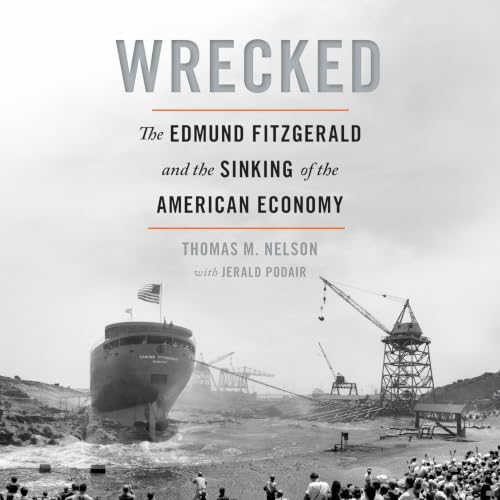
Wrecked
The Edmund Fitzgerald and the Sinking of the American Economy
No se ha podido añadir a la cesta
Error al eliminar la lista de deseos.
Se ha producido un error al añadirlo a la biblioteca
Se ha producido un error al seguir el podcast
Error al dejar de seguir el podcast
Escúchalo ahora gratis con tu suscripción a Audible

Wrecked
Compra ahora por 16,99 €
-
Narrado por:
-
Mark Sando
Wrecked links the story of America’s most infamous shipwreck to the story of an even larger disaster—the wreck of the American industrial economy. When the Edmund Fitzgerald went down in a Lake Superior storm on November 10, 1975, more was lost than the ship and the twenty-nine lives on board. The disaster was a human tragedy as well as an indictment of the American industrial policies that eventually cost the nation thousands of jobs and marooned hundreds of communities.
Written with a passionate yet factually grounded intensity, Wrecked shows that the reasons for the decline of industrial manufacturing in the upper Midwest are linked to why the Edmund Fitzgerald sank, and to the legal turmoil that followed for the victims’ families. The book conveys the sense of loss that still is felt by those affected, along with the outrage over the disappearance of manufacturing jobs and the inadequate maintenance and legal maneuvering over liability for the sinking of the ship. What follows is a fascinating critique of what went wrong and why.
The book is published by Michigan State University Press. The audiobook is published by University Press Audiobooks.
©2025 Thomas M. Nelson and Jerald Podair (P)2026 Redwood AudiobooksReseñas de la crítica
"This is the most thorough and complete work covering the sinking of the Edmund Fitzgerald." (Toby Marcovich, attorney for the families of crew members of the Edmund Fitzgerald)
"Provocative ...unites a compelling narrative of the accident and its social aftermath with a powerful call for the rebuilding the U.S. industrial base. (Nolan McCarty, Princeton University)
"This book couldn’t be more timely." (Jon Shelton, University of Wisconsin–Green Bay)


