


Como cliente Amazon Prime obtén 3 meses de Audible gratis
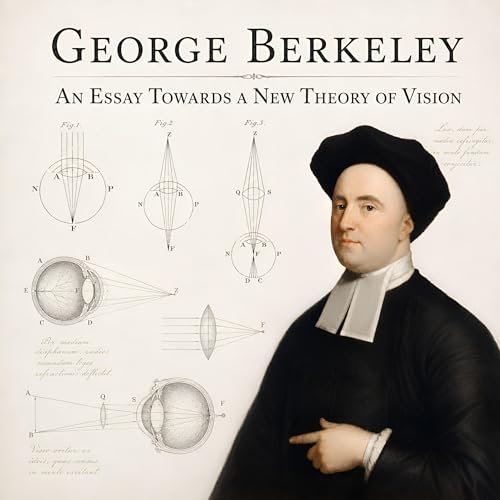
An Essay Towards A New Theory Of Vision
No se ha podido añadir a la cesta
Solo puedes tener 50 títulos en tu cesta para poder pagar.
Vuelve a intentarlo más tarde
Vuelve a intentarlo más tarde
Error al eliminar la lista de deseos.
Vuelve a intentarlo más tarde
Se ha producido un error al añadirlo a la biblioteca
Inténtalo de nuevo
Se ha producido un error al seguir el podcast
Inténtalo de nuevo
Error al dejar de seguir el podcast
0,00 € los primeros 30 días
Ahorros de temporada
0,99 € al mes durante los primeros 3 meses
Oferta válida hasta el 28 de diciembre de 2026.
Después de los 30 días, 9,99 €/mes. Cancela tu siguiente plan mensual cuando quieras.
Ahorra más del 90% en tus primeros 3 meses.
Escucha todo lo que quieras de entre miles de audiolibros y Originals incluidos.
Descarga tu audiolibro y escucha offline, sin interrupciones
Se renueva automáticamente por 9,99 €/mes después de 3 meses. Cancela mensualmente. La oferta termina el 28 de diciembre de 2026.
Disfruta de forma ilimitada de este título y de una colección con 90.000 más.
Escucha cuando y donde quieras, incluso sin conexión.
Sin compromiso. Cancela tu siguiente plan mensual cuando quieras.

An Essay Towards A New Theory Of Vision
Narrado por:
AI Voice Daniel
Compra ahora por 9,82 €
-
Narrado por:
-
AI Voice Daniel
-
De:
-
George Berkeley

Este título utiliza una narración voz virtual
Voz virtual es una narración para audiolibros generada por ordenador.
First published in 1709, Berkeley’s Essay is a landmark in the philosophy of perception. Its central claim is that we do not immediately see distance, depth, or three-dimensional space. Instead, vision presents signs (colors, lights, shapes, and appearances) that we learn to connect with touch, movement, and bodily action. What seems obvious to sight is, for Berkeley, the result of habit, association, and interpretation.
Before developing his immaterialism in the "Principles of Human Knowledge" and the "Three Dialogues", Berkeley uses vision to question what is truly given in perception. The work prepares his critique of abstract ideas, his challenge to mind-independent matter, and his idea that the natural world functions like a language through which God guides human beings.
Although modern vision science has moved far beyond Berkeley’s specific explanations, the questions he raises remain deeply relevant. His view of perception as learned, practical, and action-oriented anticipates later concerns in pragmatism, where meaning is tied to use and experience, and in phenomenology, where perception is understood through embodiment and our lived relation to the world. His emphasis on the coordination of sight, touch, and movement also resonates with contemporary cognitive science and theories of embodied perception. For listeners interested in philosophy, psychology, or the history of ideas, "An Essay Towards A New Theory Of Vision" remains a concise and provocative starting point for thinking about how we come to experience the world.
adbl_web_anon_alc_button_suppression_t1
No hay reseñas aún


